Maria Jose Guerrero
What is the ROPO effect and why it's a competitive advantage in retail
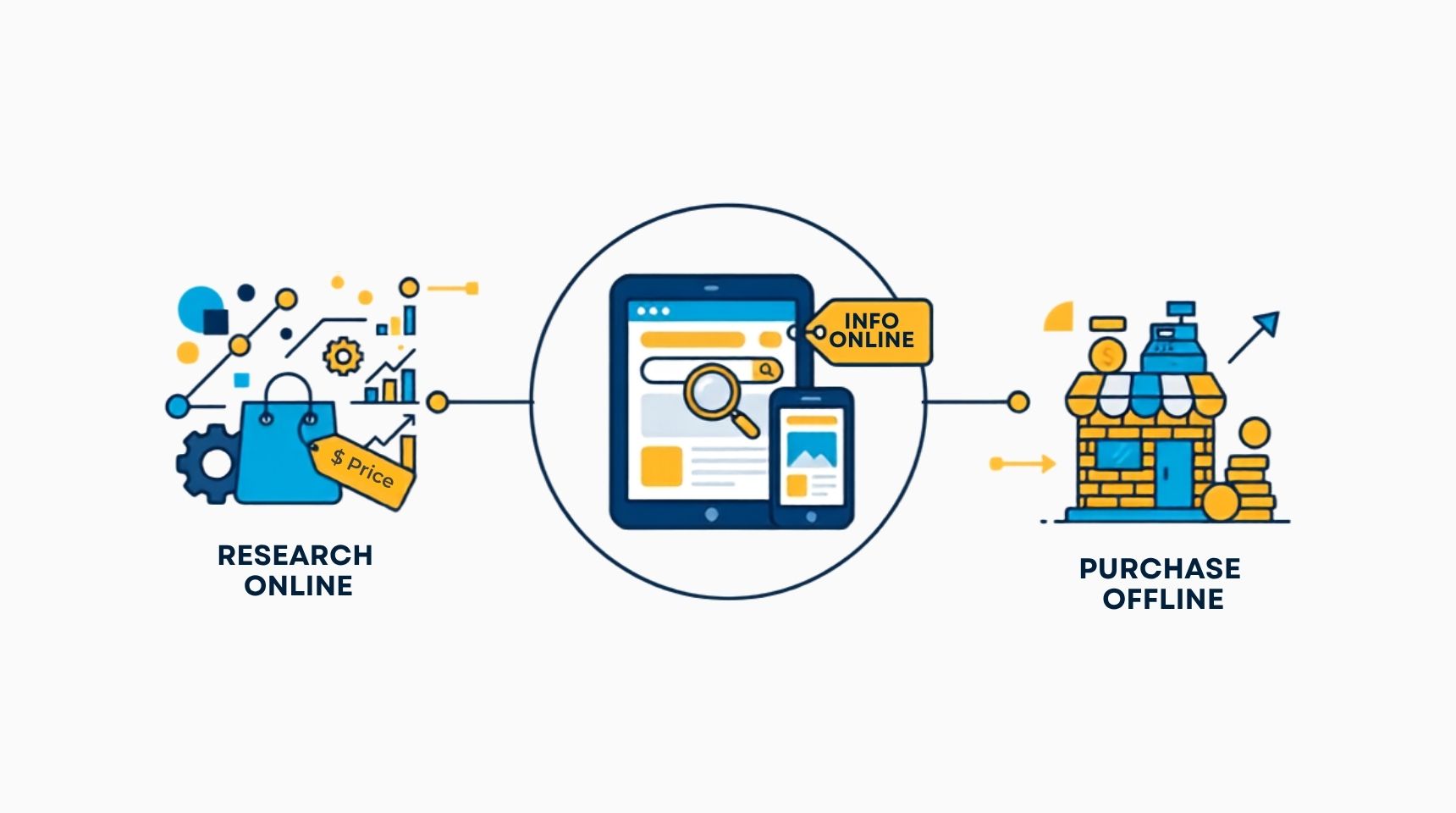
Today's retail ecosystem is defined by hybrid shopping journeys. In this context, the ROPO effect (Research Online, Purchase Offline) refers to consumers who research product features, availability, and, crucially, pricing on the internet, before completing the transaction in a physical store.
Table of Contents
- What is the ROPO effect and why it's a competitive advantage in retail
- The ROPO consumer journey: Stages and the need for pricing data
- The impact and examples of ROPO by product category
- How to adapt your omnichannel pricing strategy to ROPO behavior
- Practical use case: Maximizing omnichannel profitability with Minderest
- Frequently asked questions (FAQs) on the ROPO effect: How online research and offline purchasing shape retail pricing strategies
- Conclusion
Far from representing a loss of profitability for e-commerce, this phenomenon is a clear competitive advantage for businesses that maintain a strict omnichannel pricing strategy. The main challenge for retailers is ensuring that their digital catalog's market positioning acts as a magnet drawing customers to their brick-and-mortar locations. If the online price perception is negative compared to the broader market, you lose the opportunity to close the offline sale.
The magnitude of this behavior is undeniable. Data shows that 83% of consumers occasionally research online before buying in a physical store; 24% do it always. Source: Klarna survey, via REVIEWS.io. In 2025 US retail landscape forecasts, this blending of digital discovery and physical checkout remains one of the top drivers of brick-and-mortar foot traffic.
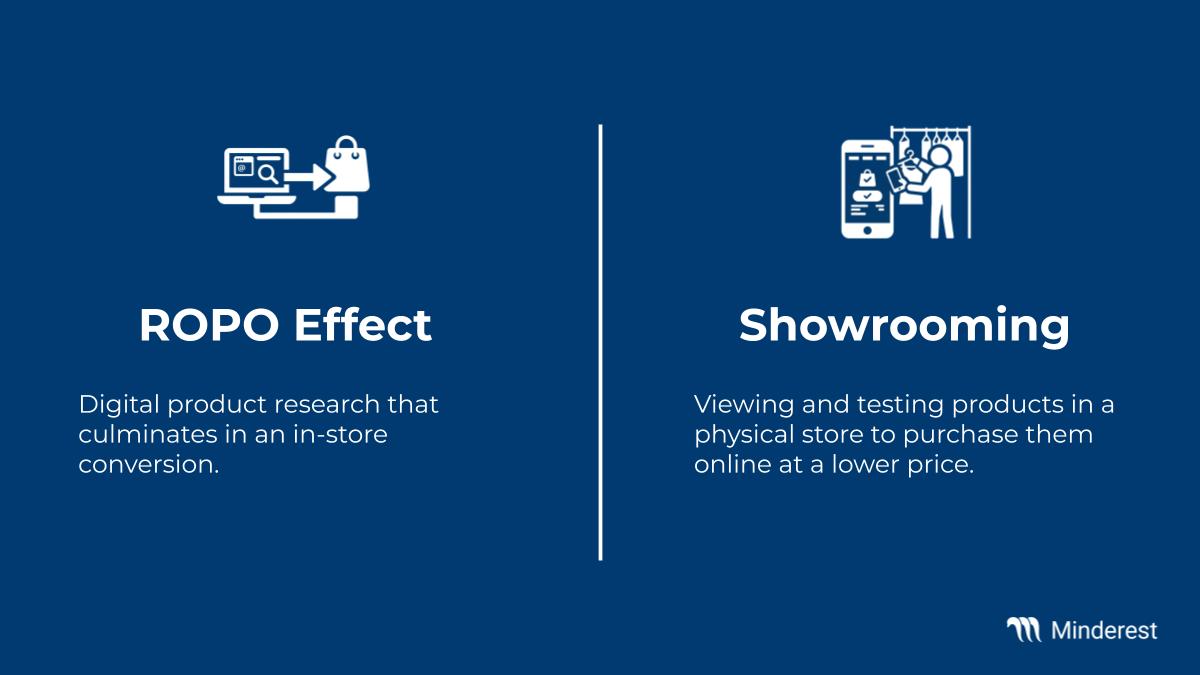
It is crucial to distinguish the ROPO effect from other consumer trends like showrooming. When comparing ROPO vs showrooming, the channel order is reversed: while the ROPO consumer turns to the digital environment for information and buys in-store, a customer practicing showrooming examines the physical product in the shop and then purchases it online, usually hunting for a lower price.
The ROPO consumer journey: Stages and the need for pricing data
Understanding what the customer is looking for at each stage of their journey is essential to provide them with the information that drives conversion. Retail price intelligence plays a decisive role here.
1. Online discovery and price comparison
During the discovery phase, users browse various websites, examine technical specifications, and, above all, evaluate the financial aspects of their upcoming purchase. Having an in-depth understanding of how do consumers compare prices enables retailers to anticipate market shifts.
In this initial stage, the online price acts as a ruthless filter. If a user notices an item is significantly more expensive on your e-commerce site than at direct competitors, they will automatically rule out an in-store visit. A lack of alignment during this first touchpoint creates an invisible loss of foot traffic to your retail locations.
2. Offline purchase decision
Once the digital price screening is out of the way, the decision to buy in a physical store comes down to highly specific factors: the urgency to have the product immediately, the need to touch and feel materials, or the value of in-person expert advice. Understanding the factors that affect price sensitivity in the offline environment helps maximize margins once the customer is standing at the checkout counter.
At this stage, the risk for the retailer arises if the customer finds unjustified discrepancies between the price they saw online and the shelf-edge label, which can shatter the trust built during their research.
Ensure your online prices drive traffic to your physical stores with our expert Price Intelligence solution.
"Consumer behavior has permanently torn down the barrier between digital and physical. Today, the price a customer sees on their smartphone screen is the biggest determining factor in whether they decide to walk through the doors of your physical store."
— Antonio Tomás - CEO of Minderest
The impact and examples of ROPO by product category
The extent to which customers research online to buy offline varies dramatically depending on the nature of the item. With a presence in over 40 countries, data extracted from multiple markets reveals that sectors where touch, trying items on, or expert assistance are critical experience this effect much more intensely.
- Fashion & Apparel: The digital phase focuses on discovering new trends, browsing catalogs, and checking inventory. However, the transaction is often closed in person to ensure the right fit, feel the fabric quality, and avoid the friction of mail-in returns.
- Consumer Electronics: Customers conduct exhaustive technical research using reviews and price comparison websites. The final purchase shifts to the physical store to ensure safe handling of the product (avoiding shipping damage) and to get setup questions answered by qualified staff.
- Home Improvement & DIY: For renovation projects, users plan and create detailed budgets online. The final purchase happens at big-box retailers because an on-site inspection of materials is indispensable, or because the logistics of shipping heavy items significantly drives up online delivery costs.
How to adapt your omnichannel pricing strategy to ROPO behavior
Ignoring the fluidity between the digital and physical realms leads to customer leaks that are hard to track. It is essential to build a solid omnichannel pricing strategy, ensuring the user experience remains frictionless regardless of the touchpoint they choose.
When a retailer commands both spectrums, they can anticipate market movements and set prices that protect profitability without diminishing their appeal. Continuously processing this data requires advanced technology; by analyzing over 5 billion monitored price points a month, companies can maintain total visibility of their competitiveness at all times.
Practical use case: Maximizing omnichannel profitability with Minderest
Imagine an enterprise retailer in the sportswear sector starting to notice a steady drop in foot traffic to their physical stores for high-end sneakers. While their digital marketing campaigns keep driving clicks, in-person conversions are plummeting.
To solve this, the retailer decides to implement Minderest, the leading pricing intelligence platform that centralizes market analysis. Using the software, they cross-reference their catalog prices with those of top national competitors. Since Minderest provides certified data quality through its constant monitoring of millions of prices, the retailer quickly spots that their online price for these sneakers is 12% higher than the industry average. This discrepancy was breaking the ROPO consumer's experience right in the discovery phase.
Armed with this data, the company would dynamically adjust its online prices to restore competitiveness and align these promotions with a seamless Click & Collect (BOPIS - Buy Online, Pick Up In-Store) service. This strategic move would successfully increase offline footfall and conversion, all without unnecessarily eroding margins, proving the clear benefits of a price tracking software.
Frequently asked questions (FAQs) on the ROPO effect: How online research and offline purchasing shape retail pricing strategies
What is the ROPO effect in retail?
It is the behavioral pattern where a user searches for information, compares features, and checks the online price of a product, only to later complete the transaction in a physical store.
How does ROPO affect pricing strategy?
It demands high competitiveness across the digital catalog. If the prices displayed on the e-commerce platform aren't aligned with the market or show inconsistencies with brick-and-mortar locations, the customer will perceive the brand as expensive and won't visit the store, resulting in reduced foot traffic and lost sales.
How can you measure the impact of ROPO on sales?
It can be quantified by tracking digital interactions linked to the physical environment, such as the use of online store locators, the growth of Click & Collect / BOPIS orders, or cross-referencing loyalty program data used first online and then scanned at the checkout register.
What is the difference between ROPO and showrooming?
They are opposite behaviors. The ROPO consumer researches online and buys in a physical location. In contrast, a showrooming shopper examines the physical product in-store and then hunts for a cheaper deal to purchase it online.
Conclusion on ROPO
The pinpoint alignment between the digital exploration phase and physical conversion requires powerful tools that give companies high quality visibility. To properly manage price perception for an increasingly informed consumer, executing rigorous pricing research isn't optional, it's the foundation of any tactical action at the point of sale.
Protect your market share across all channels by implementing the best strategy with our Price Intelligence platform.
That is why top-tier retailers and leading brands choose Minderest to unify their pricing intelligence and turn online research into real physical sales.
Find out how Minderest can take your business to the next level.
Contact our pricing experts to see the platform in action.
Related Articles
Connectors for eCommerce: Automate pricing and increase efficiency
The ability to react in real-time is no longer a competitive advantage in eCommerce; survival depends on it. However, managing prices manually between your pricing platform and your online store...
AI in E-commerce: The Revolution of Google AI Mode and ChatGPT Shopping
Artificial intelligence is rapidly reshaping e-commerce. With the launch of new tools by Google and OpenAI, the online product discovery, comparison, and purchasing process has entered a new era. ...