Price Tracking: From Reactive Tactics to a Smart Pricing Strategy
Discover what price tracking is and why it's evolved from a reactive tactic to a business intelligence engine for optimizing margins and gaining market share.
Discover what price tracking is and why it's evolved from a reactive tactic to a business intelligence engine for optimizing margins and gaining market share.
Maria Jose Guerrero
In a digital market as saturated and volatile as today's, competing on intuition alone is a recipe for disaster. Consumers have access to more information than ever, and price remains a decisive factor. According to a NIQ report, 37% of global consumers always compare prices before making a choice. In the US, this trend is even more pronounced; a 2024 McKinsey study found that 44% of American consumers are actively "trading down" to cheaper alternatives. Given this landscape, monitoring competitor prices is no longer an option—it's a strategic pillar. However, its true power isn't in simple, defensive reactions. It's in the ability to transform raw market data into a proactive competitive edge that drives profitability and growth.
Table of Contents
Price tracking is the process of systematically following and analyzing competitors' product prices in the market. But that definition barely scratches the surface. In its modern form, price tracking goes beyond simple surveillance; it's the engine of pricing intelligence, a system that collects, processes, and converts market data into actionable insights for strategic decision-making.
The evolution has been dramatic. We've moved from tedious, manual data collection in spreadsheets—a method prone to errors and instantly outdated—to automated pricing intelligence. Specialized platforms now give companies a clear and constant view of their market position, demand elasticity, and their rivals' tactics. This shift is crucial because it has a direct impact on profit margins, market share, and the value perception customers have of your brand.
A price tracking software is a technological tool designed to automate the collection and analysis of competitor pricing data across multiple online channels. Its main function is to provide businesses with accurate, up-to-date data on how their product catalog is positioned against the market, enabling dynamic and data-driven price optimization.
Adopting a technological solution for price monitoring isn't just an operational upgrade; it's a strategic transformation. For large enterprises, the benefits are magnified, directly impacting efficiency and profitability.
Pricing intelligence translates into concrete actions that optimize different areas of your business. Below, we explore some of the most impactful applications.
The market isn't static, and your prices shouldn't be either. Price tracking provides the data needed to adjust your prices dynamically based on variables like demand, stock levels, competitor prices, or seasonality. This allows you to maximize sales during high-demand periods and be more competitive during slower times. With automation, you can define rules for these adjustments to be made in a controlled manner, ensuring agility without losing strategic control. To learn more, you can read about dynamic pricing to find the optimal price point.
For manufacturers, protecting brand value is essential. When distributors sell below the Minimum Advertised Price (MAP), they not only devalue the product but also create unfair competition that damages relationships across the entire channel. A price intelligence tool allows for automatic monitoring of compliance with these policies, generating alerts when a violation is detected and providing the necessary evidence to correct it. This is especially critical in complex ecosystems, so we recommend learning how to track MAP prices on Amazon.
Private label, or store brands, are a key competitor in many sectors. Understanding their pricing strategy, product assortment, and positioning against your products is vital. Price tracking allows you to analyze how major retailers use their own brands to compete, giving you the information needed to adjust your own product and pricing strategy. You can discover how to monitor the prices of private label brands and expand your analysis on how to monitor store brands to ensure you don't miss a thing.
Discover how our price monitoring solution can give you a competitive advantage.
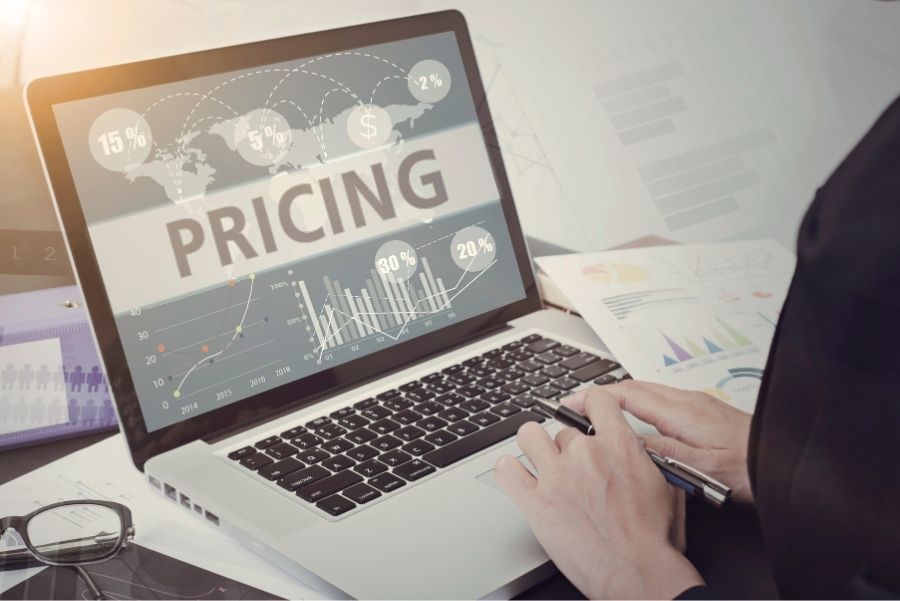
To illustrate the power of a dynamic pricing strategy, let's look at a hypothetical scenario that shows how a monitoring tool can solve a critical business problem.
Imagine a leading consumer electronics manufacturer noticing a steady erosion of their flagship products' perceived value. Several online retailers are systematically selling below the Minimum Advertised Price (MAP). This not only devalues the brand in the eyes of the end consumer but also creates deep frustration among distributors who do adhere to the pricing policies, sparking an unsustainable price war.
The manufacturer could implement an MSRP and MAP monitoring tool to automatically track the prices of its entire catalog across hundreds of e-commerce sites and marketplaces. The goal is to shift from sporadic, manual detection to systematic, automated control of the entire distribution channel.
With the solution in place, the workflow would be transformed. The platform would identify which sellers are violating the pricing policy on a daily basis. Instead of a manual search, the sales team would receive automatic alerts and reports with concrete proof (screenshots, date, and time of the violation). Armed with this information, they could contact the non-compliant distributors with irrefutable data, speeding up conflict resolution.
The expected outcome of this process would be a drastic reduction in MAP violations in a short period. This would strengthen relationships with compliant distributors, who would see their margins and investment protected. The ultimate benefit is the protection of brand value and the stabilization of profit margins across the channel, ensuring sustainable growth. To evaluate which features your company needs, you can download our Pricing Software Checklist.
"Price tracking is no longer a rear-view mirror; it's the GPS for your business strategy. It's not about seeing where your competitors have been, but about charting the most profitable route to the future."
- Antonio Tomás, CEO of Minderest
Not all price monitoring tools are created equal. For an enterprise-level company, choosing the right platform depends on several critical factors that ensure the investment translates into tangible results.
For a more detailed guide, we recommend reading our article on how to choose a pricing software.
The ideal frequency depends on your industry. In high-turnover, volatile sectors like consumer electronics or travel, it may be necessary to monitor prices several times a day. For other sectors with longer pricing cycles, a daily update may be sufficient.
Yes, it's completely legal. Price tracking is based on collecting publicly available information from competitors' websites. It's a standard market intelligence practice, similar to analyzing their marketing campaigns or product assortment.
Absolutely. Enterprise-level price tracking solutions like Minderest are designed to manage catalogs with millions of SKUs across multiple countries and currencies. Scalability is one of their core features.
Price tracking is the process of collecting and analyzing market pricing data. Dynamic pricing is the strategy of adjusting your own prices based on that data and other variables. In other words, price tracking is the intelligence source that feeds and enables an effective dynamic pricing strategy.
Ultimately, price monitoring has transcended its traditional role. It is no longer just a tool for reacting to a competitor's price drop but the core of a proactive business strategy. It allows you to protect your brand, optimize margins, understand the market on a deep level, and make decisions based on data, not assumptions.
Adopting a competitor analysis solution should not be seen as an expense, but as a direct investment in the profitability and sustainability of your business. Shifting from reacting to anticipating is the change that defines market leaders.
Request a demo and discover how Minderest can empower your business with accurate and actionable pricing data.
Find out how Minderest can take your business to the next level.
Contact our pricing experts to see the platform in action.