Maria Jose Guerrero
The holiday campaign is not a single event. It's the climax of a high-intensity commercial period known as the Golden Quarter or peak season, which starts long before the Christmas carols. While many retailers focus exclusively on the Black Friday sprint, real success lies in managing a marathon that connects multiple demand peaks. With forecasts like Deloitte's, which estimates retail sales growth between 2.9% and 3.4% in the U.S. alone (reaching up to $1.62 trillion in 2025) during this period, the opportunity is immense. But capturing it doesn’t depend on one-off discounts; it requires a smart, adaptive pricing and promotion strategy that spans from initial planning to the January sales.
Table of Contents
- Phase 1: Strategic Planning (September - October)
- Phase 2: Dynamic Execution During the Campaign (November - December)
- Phase 3: The Home Stretch and Post-Campaign (Late December - January)
- Frequently Asked Questions About the E-commerce Holiday Campaign
- From Manual Reaction to a Proactive Holiday Strategy
Phase 1: Strategic Planning (September - October)
The foundation for a successful holiday campaign is built during the fall. Going into November with an improvised strategy is a recipe for a destructive price war. This phase is about analysis and setting clear goals, allowing you to take control before the noise begins.
Catalog Audit and Demand Forecasting
Before you define a single discount, you need to know what to sell. A detailed analysis of your historical data is crucial. Your audit should include:
- Identifying your "star products" and "traffic drivers" (KVIs) that will attract customers.
- Analyzing sales performance from the previous season to see what worked and what didn't.
- Forecasting the necessary stock levels to avoid stockouts on key products.
- Defining which products will protect your margin and which can be used in more aggressive promotions.
What's the best e-commerce strategy for the holiday season? The best e-commerce strategy for the holiday season isn't a single discount, but dynamic management of prices and promotions. It starts with early planning (Sept-Oct), followed by agile execution based on competitor analysis (Nov-Dec), and ends with a post-campaign analysis (Jan) to optimize the next cycle.
Competitor Analysis: The First Step to Differentiation
Monitoring your competitors' pricing and assortment strategies before the campaign kicks off is critical. Are they introducing new brands? Which categories did they promote last year? Understanding the landscape allows you to position yourself effectively. If all your rivals are competing on price in one category, your opportunity might lie in offering a product bundle or added value, like free express shipping.
Case Study: Price Planning in the Toy Category
The Challenge (Manual Process): A Toy Category Manager tries to set their holiday pricing strategy in October. They spend two days creating an Excel spreadsheet, manually visiting 5 competitor websites for their 30 star products. By the time they finish, their data is already outdated; they don't know if a competitor has restocked a sold-out item or if another has launched a "secret" Buy 2, Get 1 Free promotion.
The Solution (Pricing Intelligence): With a competitor price monitoring tool, the manager automates this data collection. On their dashboard, they see not just the price but also the stock levels, shipping costs, and active promotions daily. They spot that their main rival is low on stock for the year's hottest toy. Instead of lowering the price of that product, they decide to maintain their margin and focus discounts on complementary accessories, knowing the rival can't compete on the main product.
Defining Objectives and a Promotional Calendar
With data in hand, establish clear KPIs: are you looking to maximize revenue, protect margin, or gain market share? Define specific goals for each milestone (Black Friday, Cyber Monday, Christmas, January sales) and create a promotional roadmap. This calendar will give you a flexible guide to react to market movements without straying from your main objectives.
Phase 2: Dynamic Execution During the Campaign (November - December)
With your plan in place, it's time for execution. This phase is a test of agility. Market conditions change by the hour, and the ability to adapt your strategy based on reliable data is what separates leaders from followers.
"The holiday campaign isn't won with the most aggressive Black Friday discount, but with the smartest pricing strategy over 90 days. Success lies in agility and control."
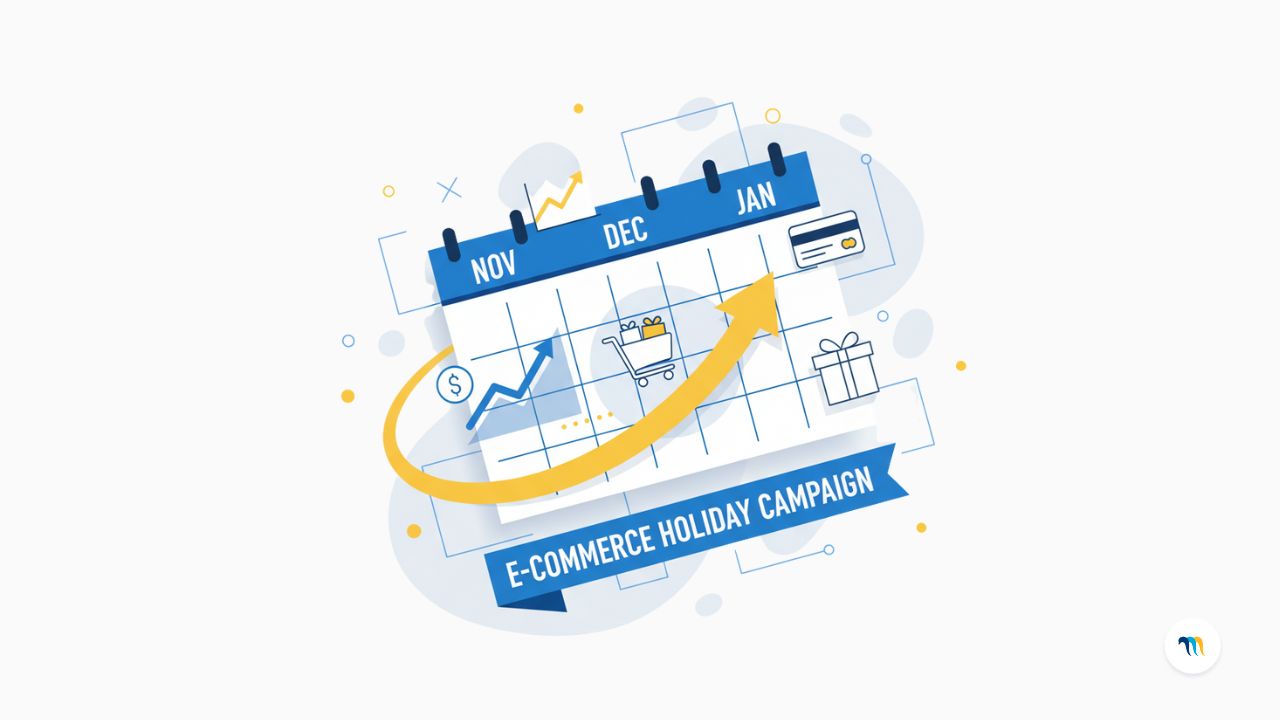
From Black Friday to Cyber Monday: The Kick-Off
These events mark the beginning of peak demand. It's essential to maximize impact without sacrificing your entire quarter's margin. This is where dynamic repricing based on competitor monitoring becomes essential. Adjusting your prices in real time based on a competitor's stock or price changes allows you to be the most attractive option at the precise moment of purchase, protecting your product-by-product profitability.
If you want to take a leap toward more advanced price management, discover how Dynamic Pricing helps you optimize prices and improve your promotions.
The Post-Cyber Monday "Lull": How to Maintain Momentum
After the BFCM frenzy, there's usually a brief dip in demand. However, consumers are still actively looking for gifts. This is the time to re-engage users who didn't convert with smart promotional tactics. Marketing should focus on reminding customers of Christmas shipping deadlines, creating a renewed sense of urgency.
Some effective tactics for this period include:
- Flash sales on specific categories for a limited time.
- Product bundles (e.g., "buy A+B and get C free") to increase perceived value.
- Volume discounts (e.g., "20% off the second item").
- Shipping incentives (e.g., "Free express shipping on orders over $X/£X").
Mastering Promotions: The Complete Guide for Retailers
Promotion Intelligence as a Competitive Weapon
Price isn't your only lever. The holiday season is saturated with offers: Buy 2, Get 1 Free, 50% off the second item, free shipping, gift with purchase. Knowing which promotion each competitor is offering for every product gives you a decisive advantage. This concept is known as Promotion Intelligence.
Case Study: From Blind Reaction to Strategic Promotion
Imagine this scenario: you're the Pricing Manager for a tech e-commerce store or marketplace.
The Challenge (Lack of Data): You notice your main competitor (Competitor A) has just activated a "Free 24-Hour Shipping" promotion on the season's bestselling TV. Your knee-jerk reaction is to match the offer, absorbing a logistics cost that erodes your margin. What you don't see is that Competitor B is offering the same TV with a free soundbar, and Competitor C has a straight 5% discount.
The Solution (With Minderest): A Price & Promotion Intelligence dashboard alerts you in real time not only to Competitor A's change but to the entire landscape. You see all three active promotions in the market. With this information, you decide not to match the free shipping but to activate your own bundle (TV + Wall Mount with a 30% discount), which has a higher perceived value for the customer but a lower cost to you than the soundbar. You've gone from reacting blindly to making a strategic, data-driven decision.
Manually tracking thousands of promotions in real time is impossible, as is making decisions without seeing the full market picture. To make data-driven decisions and automate the optimization of your offers, you need a promotion intelligence tool. Discover how Minderest helps you monitor the market and design more effective campaigns with Promotion Intelligence.
Phase 3: The Home Stretch and Post-Campaign (Late December - January)
The campaign doesn't end on December 25th. Smartly managing the final push and the start of the new year is key to clearing inventory, capitalizing on last-minute sales, and, most importantly, gathering data to improve your future strategy.
Last-Minute Shoppers and December Promotional Events
As you focus on last-minute shoppers with express shipping guarantees and digital gift cards, it's important to remember that the December promotional window is wide and global. In many markets, the sales season doesn't slow down. Asian-influenced campaigns like Double Twelve (12.12) extend promotional activity globally. Furthermore, post-Christmas events like Boxing Day, a major shopping day in the UK, Canada, and Australia, mark the beginning of clearance sales. Being aware of these dates allows you to optimize your sales strategies throughout the peak season.
The January Sales: The Final Sprint
For many retailers in the US and UK, the holiday season has one last climax: the post-holiday sales period. This is the time for consumers to spend their gift cards, make returns, and hunt for bargains. It is crucial to adapt your communication and offers for this event, which sees high demand in categories like fitness equipment, home organization, and wellness products. Guarantees of fast shipping and clear return policies are decisive conversion factors during this final sprint.
Post-Mortem Analysis: Paving the Way for Next Year's Success
Once the season is over, the most important work begins. Gathering the intelligence from this campaign is the foundation upon which you'll build next year's success. Your analysis should answer key questions:
- Which products (SKUs) were bestsellers, and at what price?
- Which promotions (Buy 2 Get 1 Free, % discount, gift with purchase) generated the best conversion rate vs. margin?
- Which competitor actions forced you to react?
- How did your pricing strategy perform against the market during demand peaks?
Frequently Asked Questions About the E-commerce Holiday Campaign
When should I start preparing my e-commerce store for the holidays?
Ideally, strategic planning should begin in September. This includes the catalog audit, competitor analysis, and defining the promotional calendar. Technical site optimization and logistics preparation should be ready by the end of October.
Is it better to focus all my efforts on Black Friday?
No, this is a common mistake. Focusing your entire strategy on Black Friday can destroy your margin and deplete your stock prematurely. The holiday campaign is a marathon; Black Friday is just the first lap. It's vital to maintain a dynamic pricing strategy throughout November, December, and January.
How can I compete on price without destroying my margin?
The key is pricing intelligence and selective repricing. You don't need to be the cheapest on your entire catalog. Monitor your competitors and focus your discounts on the key value items (KVIs) that attract the most traffic, while protecting the margin on complementary or long-tail products.
What's more important: price or promotion?
Both are interconnected and depend on the competitive context. Sometimes, a slightly higher price with free shipping is more attractive than the lowest price on the market. Promotion Intelligence tools allow you to analyze which type of offer (direct discount, Buy 2 Get 1 Free, gift with purchase) works best in your sector at any given moment.
From Manual Reaction to a Proactive Holiday Strategy
Facing the e-commerce holiday campaign by trying to adjust prices and promotions manually is like navigating a storm without a rudder. Success no longer depends on intuition, but on the ability to process market data and react with agility. The three pillars of a profitable campaign are data-driven planning, dynamic execution combining price and promotion intelligence, and a rigorous post-mortem analysis.
Don't let your competition dictate the rules of the game during the most important campaign of the year. Get ahead with accurate data and a winning pricing strategy. Request a demo of Minderest and discover how our Promotion Intelligence solution can give you the competitive edge you need.
Find out how Minderest can take your business to the next level.
Contact our pricing experts to see the platform in action.
Related Articles

The Algorithm is Ruthless: Why Price Inconsistency Dooms You to Invisibility in AI Search Engines
The digital retail ecosystem is undergoing a structural transition. The advent of Generative Engine Optimization (GEO) and new conversational models has transformed how consumers discover products....
Why Minderest is the Best Wiser Alternative for Pricing Intelligence
Recently, a significant milestone has made waves in the retail sector: the Chapter 11 financial reorganization process initiated by Wiser Solutions in the US. While this doesn't mean the company is...